
The Validation Pattern manifests as over-analyzing stakeholder reactions, seeking excessive consensus before making decisions, and softening your communication to maintain approval.When disengaged from these survival response, the raw material of Validation transmutes into your greatest leadership asset: Relational Resonance.
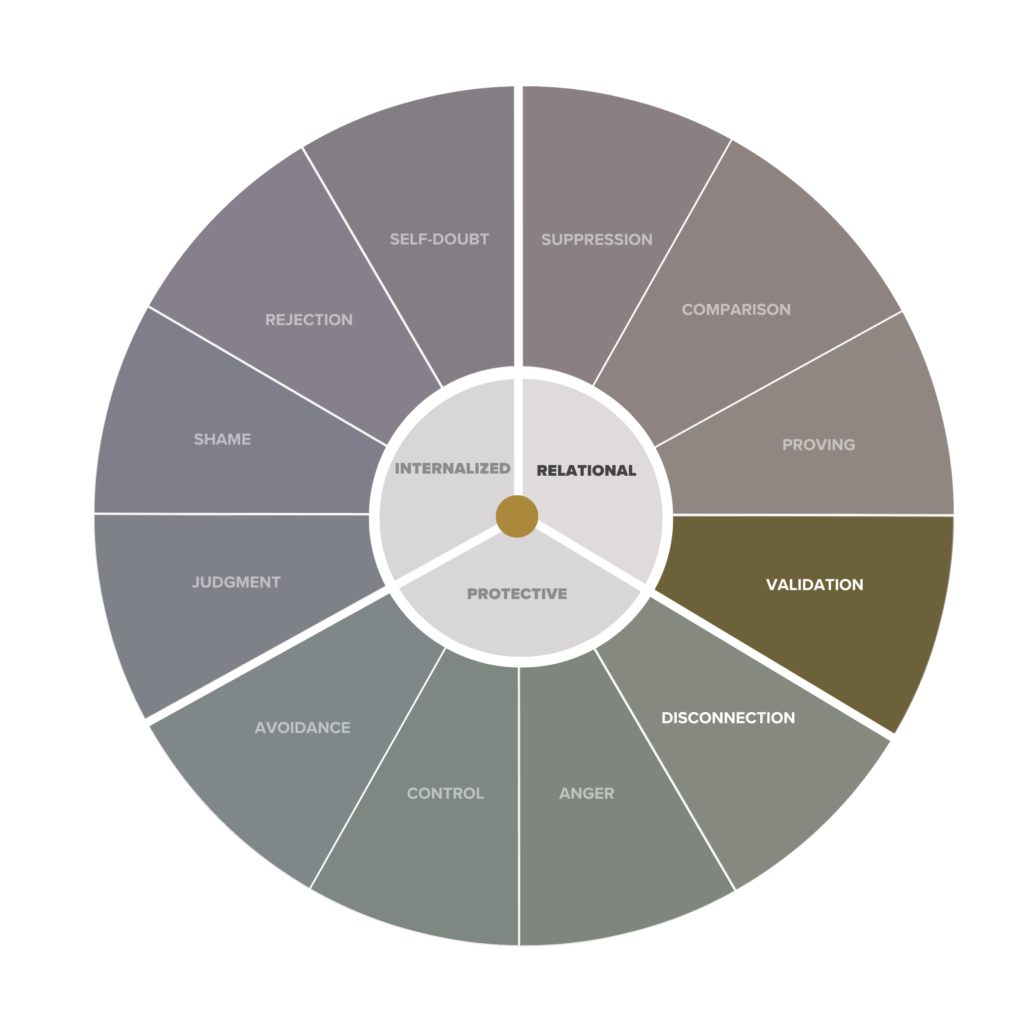
Continue Reading
Under acute pressure, your reactive response is to ensure key stakeholders approve of you before you fully back your own strategy. In daily revenue leadership, the Validation Pattern expresses itself as:
The Shadow Origin
You are not seeking validation because you lack capability. The Validation Pattern formed in environments where being direct, visible, or misaligned with authority resulted in swift professional or relational consequences. Your nervous system learned a core survival rule: If I secure complete approval before moving, I cannot be targeted or isolated.
Beneath this pattern lives profound executive gifts:
Integration does not mean ignoring stakeholder dynamics or becoming an abrasive dictator. It means detaching your situational awareness from fear so it becomes Relational Resonance & Absolute Authority
Needing Complete Concensus: Diluting strategy to ensure every executive approves before moving.
Relational Resonance: Reading the room accurately, addressing unstated concerns directly, and standing firm in your decision.
Softening Operational Realities: Packaging bad news so gently that the underlying business risk is obscured.
Radical Candor: Delivering unpolished operational data clearly, calmly, and with constructive authority.
Managing Stakeholder Reaction: Adjusting your leadership stance based on real-time feedback or hesitation.
Internal Sovereignty: Holding a steady executive state regardless of board, CEO, or peer pushback.
The Unintegrated Pattern
The Integrated Asset
Discovery Signals
Reclaiming Your Authority
1. Translate the Business Pressure: State the raw operational reality. (e.g., “Outbound pipeline conversion dropped 22% this quarter due to inaccurate target account lists.“)
2. Identify the Default Pattern: Pinpoint the internal pressure state that’s driving your reaction. (e.g., “I feel an urgent impulse to soften this metric in the board deck so executive leadership doesn’t question my team’s capability.“)
3. Interrupt the Distortion: Diffuse your response pattern by recognizing that seeking consensus or sugarcoating data sacrifices the longer term strategy to manage the short-term impression.
4. Re-Anchor the Decision: Reclaim your executive authority by presenting the unit economics clearly. (e.g., Present the raw metric directly, outline the root cause, and state the corrective action plan directly.)

Next Steps
Decision Velocity Session
Decision Velocity Advisory
A 3-month private advisory for senior B2B revenue leaders navigating high-stakes growth pressure, decision latency, and stakeholder volatility.
Other Patterns
Realtional Patterns
internalized Patterns
Protective Patterns