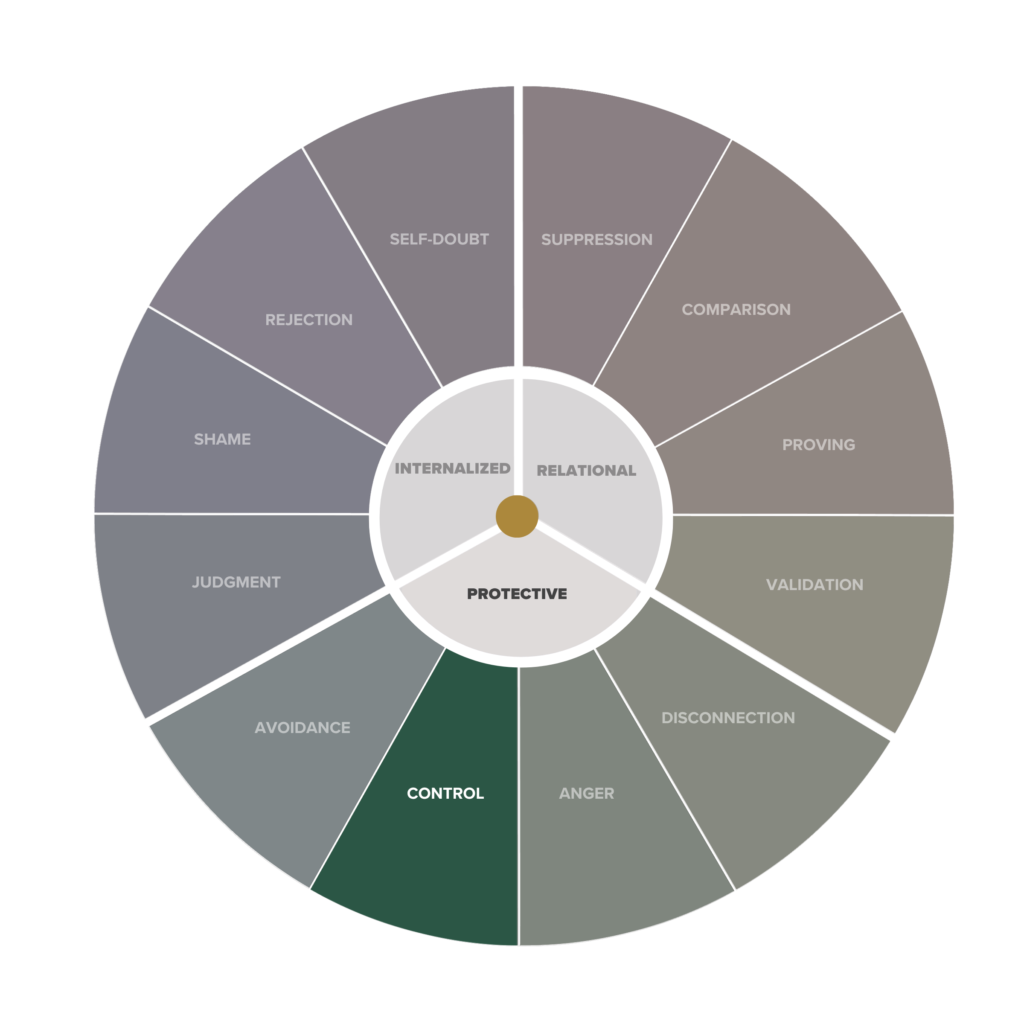
Pressure Transmutation for B2B Revenue Leaders

The Control Pattern: Transmuting Micromanagement into Systems Architecture

The Control Pattern manifests as unilateral decision-making, excessively monitoring GTM execution, and trying to maintain an unsustainable grip on operational details. When disengaged from these survival responses, the raw material of Control transmutes into your greatest leadership asset: Systems Architecture.
The Control Pattern in B2B Revenue Leadership | The Pressure Pattern Map | LarissaNicole.com

Continue Reading

The Visible Behavior

When Safety Is Equated with Predictability

Under acute pressure, your reactive response is to grab the steering wheel white-knuckle the situation. In daily revenue leadership, the Control Pattern expresses itself as:

The Shadow Origin

Your Need for Control Is Not A Character Flaw

You are not micromanaging because you lack leadership skills. The Control Pattern formed as an adaptive protective mechanism in environments where unpredictability, chaos, or unmonitored execution resulted in severe personal or professional fallout. Your nervous system learned a core survival rule: If I control every variable, I remain safe from catastrophe.

Beneath this pattern lives extraordinary executive gifts:

The shadow is not the capacity for control itself. It’s that this intelligence has been misused to manage your anxiety.

The Transmutation Alchemy

Releasing the Grip

Integration does not mean abandoning oversight, relaxing your standards, or slipping into passive management. It means disconnecting your structural intelligence from fear so it can be deployed as Systems Architecture & Empowered Delegation.

The Unintegrated Pattern (Defensive State)

The Integrated Asset (Grounded Authority)

Micromanaging the Execution: Checking every detail because you do not trust the outcome.
Designing a Clear Architecture: Building robust operational frameworks and handoffs that ensure quality without your direct intervention.
Taking All Responsibility: Becoming the bottleneck by making every GTM decision yourself.
Empowered Delegation: Setting clear boundaries and holding teams accountable for outcomes rather than process.
Managing Internal Panic: Focusing on minor details to soothe your own nervous system anxiety during pipeline dips.
Strategic Equanimity: Reading data objectively without letting temporary volatility force reactive overcorrections.
Defensive State

The Unintegrated Pattern

Grounded Authority

The Integrated Asset

Discovery Signals

Is the Control Pattern Active Right Now?

A few key indicators:

Reclaiming Your Authority

Real-Time Somatic Intercept for Control

When you notice the impulse to grip or micromanage, run your execution through the 4-step Real-Time Intercept Model:

1. Translate The Business Pressure

State the raw operational reality. (e.g., “The campaign launch is stalling because RevOps hasn’t finalized lead routing rules.“)

2. Identify The Default Pattern

Pinpoint the internal pressure state that’s driving your reaction. (e.g., “I fear that delayed routing will hurt quarterly pipeline, so I am jumping in to write the rules myself.“)

3. Interrupt The Distortion

Diffuse your response pattern by recognizing that micromanaging creates severe decision latency, trains team passivity, and burns out your personal capacity.

4. Re-anchor THe Decision

Reclaim your executive authority by presenting the unit economics clearly. (e.g., Set explicit boundaries, conditions, and completion deadlines for RevOps. Then, step back and empower them to own the execution.)

Next Steps

Transmute Your Pattern into Performance

If you are ready to detach your structural intelligence from executive survival mode and build an engine that operates with true momentum:

Decision Velocity Session

A 90-minute private executive intensive for a single high-stakes revenue decision, GTM pressure point, or stakeholder conversation.

Decision Velocity Advisory

A 3-month private advisory for senior B2B revenue leaders navigating high-stakes growth pressure, decision latency, and stakeholder volatility.

Other Patterns

Three Domains of Executive Transmutation

These twelve Pressure Patterns represent the responses that surface when growth stagnates, board oversight intensifies, or organizational complexity spikes. The patterns map across three distinct operational domains:

Relational Patterns

Authority & External Perception

Internalized Patterns

Self-Worth & Executive Standards

Protective Patterns

Strategic Defenses & Execution